

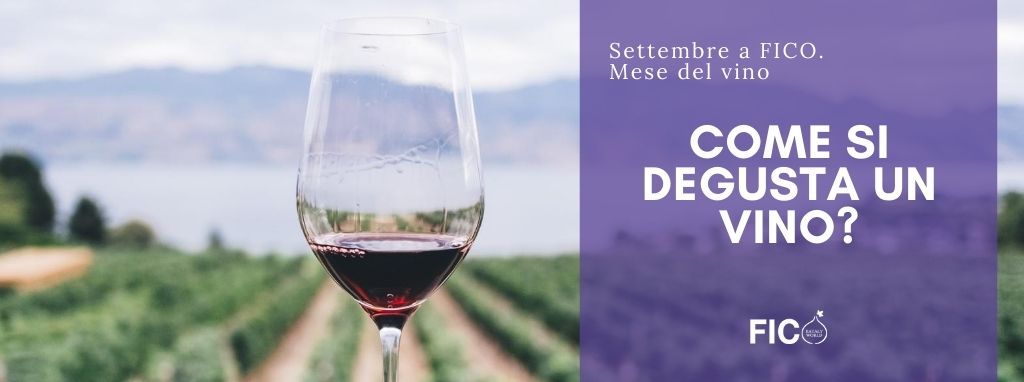
Short guide on how to taste wine with confidence
Short guide on how to taste wine with confidence
One wine for lunch, one for an aperitif, and another for dinner. Red for meat, white for fish. The new orange, the rediscovered rosé. Warm, cool, to be decanted, chilled. If you go into a panic whenever it's time to taste the wine, suggesting that someone else at the table do it, then this short guide on how to taste wine with confidence is for you.Wine tasting: the glass
Choosing the right glass to hold wine that has been stored in a bottle for “X” years is easier said than done, but the good news is that when it comes to tasting a universal glass is used for all wines. Indeed, there's an ISO standard medium-sized tasting glass that's suitable for any type of wine. Aside from tastings, however, each wine has its own glass. To keep things simple, here are some basic principles to follow when choosing a wine glass.- Per i vini giovani scegli bicchieri con l’imboccatura stretta. Occhi puntati all’etichetta dunque. Il motivo è che i vini appena nati, o delicati in generale, devono arrivare diretti al naso senza dispersione di aroma.
- Più il vino è corposo e importante invece, per età o per complessità, più ampia deve essere l’imboccatura del calice che scegliamo, così da permettere di cogliere tutte le sfumature olfattive.
- Per gli spumanti secchi è d’obbligo il flûte, per quelli dolci e aromatici bene anche la coppa.
- Per i vini passiti e liquorosi meglio un calice di piccole dimensioni con un’apertura in proporzione abbastanza ampia e uno stelo generalmente allungato, per dare eleganza al bicchiere.
- For young wines choose glasses with a narrow mouth. This means you need to check the label first. The reason is that new wines, or delicate wines in general, must reach the nose without dispersion of their aroma.
- The more full-bodied and important the wine, however, either due to age or complexity, the wider the mouth of the glass needs to be to allow you to grasp all its olfactory nuances.
- For dry sparkling wines a flute or champagne glass is a must, while for sweet, aromatic wines a goblet will do just fine.
- For straw and liqueur wines it's best to use a small glass with a fairly wide opening and a generally elongated stem, to give elegance to the glass.
Wine tasting: the color
To be able to assess the color of a wine you need some experience with grapes. For example, while a wine with a deep red color is usually synonymous with age, Nebbiolo is different as the grape itself has a weak color that tends towards orange over time. So what can you do?- Sappi che la palette dei vini prevede 11 colori. Vini bianchi: Giallo verdolino, Giallo paglierino, Giallo dorato, Giallo ambrato. Vini rosati: Rosa tenue, Rosa cerasuolo, Rosa chiaretto. Vini rossi: Rosso porpora, Rosso rubino, Rosso granato, Rosso aranciato.
- Inclina il bicchiere di 45° sopra una superficie bianca e valutane il colore osservandolo attraverso la parte di minor spessore del bicchiere.
- I vini giovani, bianchi e rossi, rientrano quasi sempre nelle prime due scale di colore.
- Gli ultimi termini delle scale sono tipici dei vini più evoluti.
- Le tonalità ambrate sono invece caratteristiche dei vini passiti.
- Note that the wine palette has 11 colors. White wines: Greenish yellow, Straw yellow, Golden yellow, Amber yellow. Rosé wines: Soft pink, cherry pink, Light pink. Red wines: Purple red, Ruby red, Garnet red, Orange red.
- Tilt the glass 45° over a white surface and assess its color by looking at it through the thinnest part of the glass.
- Here again the label can be useful. Young white and red wines almost always fall into the first two color ranges.
- The last colors on the scale are more typical of older wines.
- Amber shades are characteristic of straw wines.

Wine tasting: the aroma
Aroma is also a characteristic that requires commitment and passion. But don't worry, you can learn! In fact, olfactory experience is a bit like going to the gym. You have to get to know various aromas by smelling not just different wines but also fruits, flowers, herbs, even the cork itself, so you can deeply grasp the characteristics of a wine. So train your sense of smell to recognize as many aromas as possible and trust your...nose!
Wine tasting: the taste
Then comes the most anticipated moment, the moment when you actually taste the wine, and you discover whether the sensations assessed before are confirmed or proven wrong, whether it's the right choice or not. Taste is activated on two levels: one helps you understand whether a wine is good or defective, and the other plays on the flavors that appeal to our personal tastes. To put it simply, the taste of vinegar is certainly evidence of a deficient wine, while a negative personal preference is different.There are four basic tastes and they are perceived in different parts of the tongue: sweet, bitter, acidic, salty. These are combined with the characteristics of alcohol and tannins that affect the palate.
Wine tasting: the persistence
Finally there's persistence, an abstract quality that describes the ability of a wine to leave a sensory memory more or less long after swallowing, in other words how long the sensations, flavors and final aftertaste are sensed in the mouth. Here again two rules are sufficient:- A simple wine has a persistence of a few seconds.
- An important wine, with many aromas, that doesn't stop with a classic fresh flower, but also has notes of wood, jam, pepper, spices and so on, must have a persistence of about 15 seconds.
So raise your glass with confidence, you too can be an enthusiastic amateur sommelier!

- Bologna (Italy)
- Via Paolo Canali 8
- Piva 03409851205
Follow us on social network